Local security developments
Incidents, law-enforcement activity, demonstrations, major civic events and other developments close enough to affect access, staffing or protective posture.
Protective security intelligence for organizations at risk
PosturePoint Ops is guided protective awareness for public-facing facilities, community institutions and organizations whose risk can change because of local events, geopolitical spillover, weather, cybersecurity activity, digital targeting or emerging threats.

PosturePoint Ops is a protective-security, cybersecurity-awareness and operational-intelligence service for community centers, faith and cultural institutions, campuses, nonprofits, public gathering spaces and other facilities where external events can alter security or operating posture.
Built for the real exposure surface
A planned rally, a geopolitical escalation, a road closure, a cybersecurity campaign, a severe-weather window or a local threat can matter for different reasons. Ops is designed to establish whether the development has a real nexus to your people, facilities or operations.
Incidents, law-enforcement activity, demonstrations, major civic events and other developments close enough to affect access, staffing or protective posture.
Threats or activity that may create elevated concern for visible community, faith, cultural or mission-driven institutions.
International developments assessed for plausible local consequences instead of being dumped into a generic world-news stream.
Publicly reported campaigns, online targeting, infrastructure or vendor incidents and other digital developments assessed for a plausible operational nexus and coordination needs between security, IT and leadership.
Heat, wind, rain, outages, transportation disruption and access issues that may change facility operations or staffing requirements.
Known events and public activity evaluated for timing, proximity, crowd effects, access issues and other operational consequences.
Cybersecurity is part of the protective picture
PosturePoint Ops includes a cybersecurity-awareness component because cyber activity does not stay neatly inside the IT department. When public-source cyber developments have a plausible nexus to your organization, Ops adds that context to the same protective picture used for local threats, demonstrations, geopolitical spillover, weather and infrastructure risk.
Ops role: surface relevant external cyber developments and explain why security, IT or leadership may need to pay attention.
Ops role: connect public targeting, doxxing or hostile online activity to facility, personnel, event or executive-security implications when warranted.
Ops role: flag relevant public-source incidents affecting critical services, vendors or infrastructure so protective and continuity decisions are made with shared context.
Boundary: PosturePoint Ops does not replace a SOC, SIEM, EDR, MDR, vulnerability-management program or incident-response capability, and it does not monitor your private network. It adds external cyber context and operational implications to the broader protective picture.
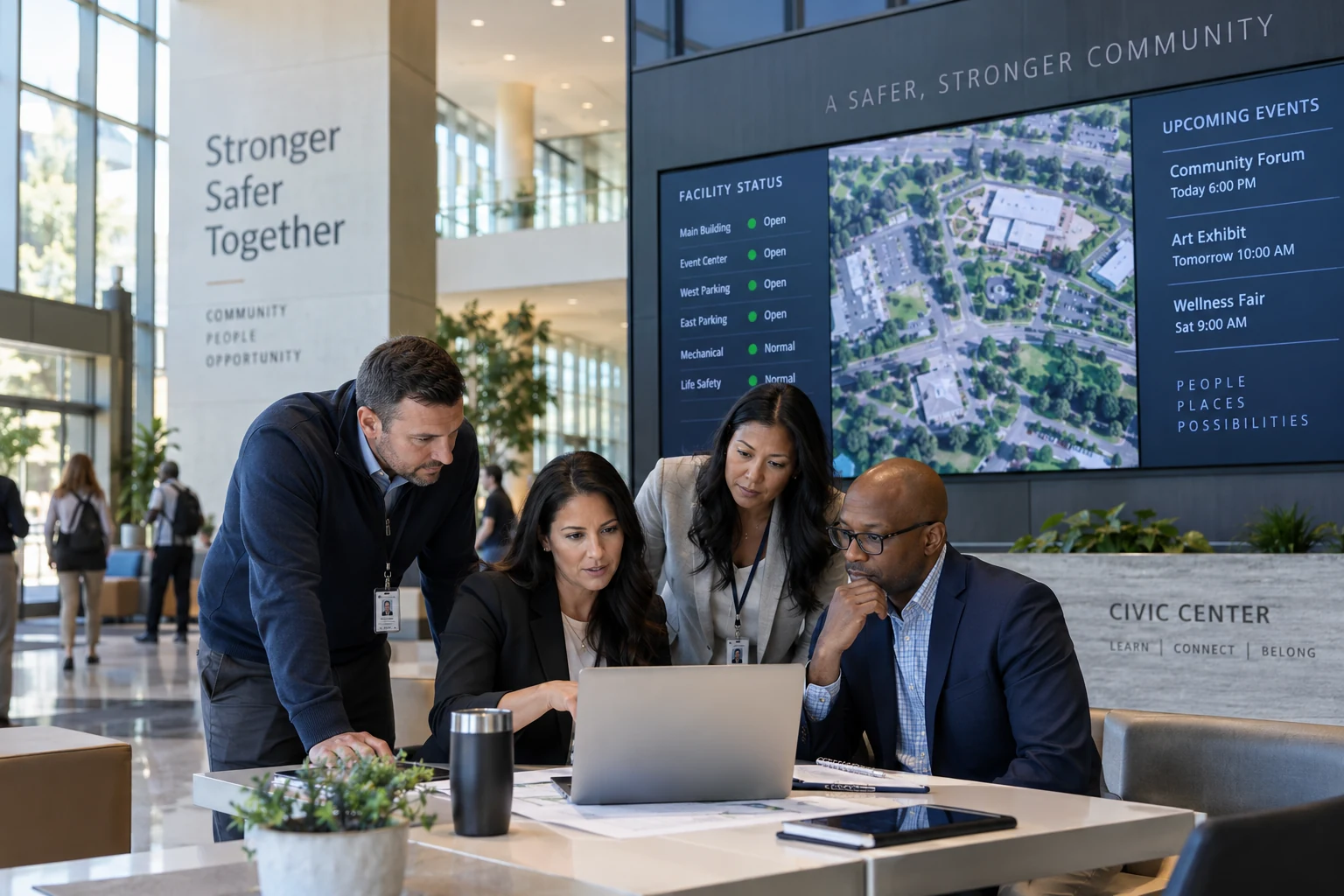
Concise enough to read. Specific enough to act on.
Decision-ready by design
New facts or a meaningful change from the prior posture.
The specific nexus to your location, mission, community or operations.
Facility access, staff, events, programs, executive travel, IT or other operating areas.
Mitigation, coordination, staffing, monitoring or no change — stated explicitly.
Evidence and uncertainty stay visible instead of disappearing behind a mystery score.
A forward window turns today's brief into tomorrow's preparedness.
Illustrative protective scenarios
These examples describe the operating concept, not a guarantee that every event requires escalation.
Ops implication: reassess access control, arrival routes and staffing for the affected window.
Ops implication: increase source monitoring, coordinate internally and clarify escalation thresholds.
Ops implication: review facility access, communications, backup power and program continuity.
Who Ops is for
Especially when public access, community profile, symbolic significance, duty of care or mission continuity create a meaningful exposure surface.
PosturePoint Ops FAQ
PosturePoint Ops is designed for public-facing and higher-exposure organizations such as community centers, faith and cultural institutions, campuses, nonprofits, event spaces and facilities where external conditions can quickly affect protective posture.
Relevant local security developments, public events and demonstrations, geopolitical spillover, cybersecurity activity, doxxing and digital targeting, infrastructure conditions, severe weather and other external factors that may affect people, facilities or operations.
It adds public-source cyber threat context when digital developments have a plausible nexus to the organization. Examples can include publicly reported campaigns, doxxing or online targeting, infrastructure or vendor incidents and other cyber developments that may require coordination between security, IT and leadership.
No. PosturePoint Ops does not monitor private networks or replace technical cybersecurity controls, a SOC, SIEM, EDR, MDR, vulnerability management or incident response. It adds external cyber context and operational implications to the broader protective picture.
No. PosturePoint Ops is protective decision support. It does not replace 911, law-enforcement notifications, emergency mass notification systems or an organization's security procedures.
Automated analysis can help organize and contextualize public-source information, but the product is designed to support accountable human judgment with source-backed context rather than make autonomous security decisions.
Protective awareness around your actual facility
Bring your geography, facility profile, mission and current blind spots. We will build the conversation around them.